
Why Containerised Data Centres Are Safer Than Pouring Concrete
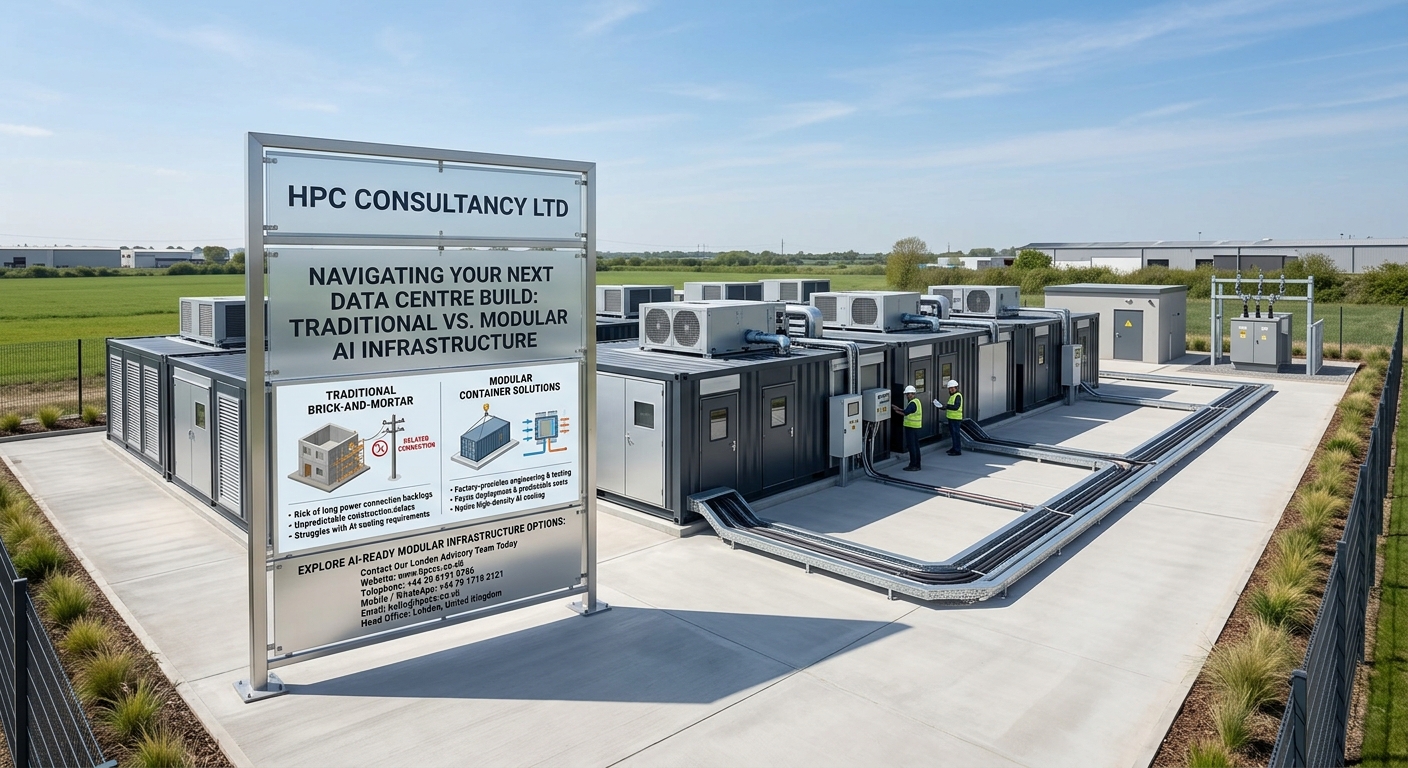
If you are planning to build a new data centre right now, you are facing immense pressure because artificial intelligence and heavy cloud workloads are driving an unprecedented demand for compute power.
At the same time, if you are considering a switch from traditional brick-and-mortar buildings to containerised modular data centres, feeling a bit nervous is completely normal. You might wonder if these units are truly secure, how they hold up over time, or whether your expensive AI servers are safe inside a pre-built structure.
Those concerns are completely valid because when you have trusted solid concrete walls and on-site mechanical rooms throughout your career, shifting to modular units feels like a massive leap of faith. However, when you look closely at current construction delays and power grid bottlenecks, sticking to old-school building methods has quietly become the much riskier choice.
The Hidden Nightmares of Traditional Construction
Building a permanent data centre from scratch on an open site exposes your investment to severe operational friction and financial risk. You can finish constructing a concrete shell only to discover that the local power substation has a multi-year backlog to connect you to the grid, leaving your facility empty while capital remains locked up. Managing dozens of subcontractors out in unpredictable weather also invites human error, where a single oversight in waterproofing or electrical wiring can cause catastrophic failures later. Furthermore, traditional buildings were never designed for modern AI hardware because high-performance AI servers run so hot that standard air conditioning fails to keep up, forcing you into expensive structural retrofits and budget blowouts.
Why Factory-Built Modular Units Offer Better Control
The biggest fear people have with containerised solutions is the worry that they are just glorified shipping containers built in a rush, but high-end modular data centres are actually precision-engineered industrial assets. Instead of welding and wiring in the middle of a muddy, chaotic construction site, these units are assembled inside controlled manufacturing plants where every electrical connection and cooling loop is rigorously tested before delivery. Factory builds happen on strict schedules without weather delays, and they come with advanced direct-to-chip liquid cooling systems engineered from day one to handle high-density AI workloads without risking thermal throttling.
De-Risking Your Capital Through Predictable Speed
In infrastructure development, time is your greatest financial adversary because every month an unfinished project sits idle eats away at your returns. Containerised solutions dramatically de-risk your project by giving you complete predictability through fixed factory costs that eliminate endless change orders and surprise budget overruns. Instead of guessing your space requirements years in advance and spending a fortune upfront on empty square footage, modular architecture allows you to deploy a single unit today and scale up incrementally as your client demand grows.
Navigate Your Next Build With HPC Consultancy Ltd
Transitioning from traditional building methods to modular AI infrastructure does not mean you have to figure it out alone, as HPC Consultancy Ltd helps investors and developers navigate digital transformation safely. From initial site selection and power grid auditing to factory-level technical oversight, our team ensures your project is structured for long-term success.
To discuss your next data centre build or explore AI-ready modular infrastructure options, contact our London advisory team today:
-
Website: www.hpccc.co.uk
-
Telephone: +44 20 8191 0786
-
Mobile / WhatsApp: +44 79 1718 2121
-
Email: hello@hpccc.co.uk
-
Head Office: London, United Kingdom
FAQs:
Section 1: End-to-End Advisory & Strategic Planning for Poland Projects
-
How can Poland investors and developers associated initiate a new data centre construction project with HPC Consultancy Ltd?
Investors and developers associated with Poland can initiate new construction projects by connecting directly with HPC Consultancy Ltd through their official corporate portal or WhatsApp to schedule a preliminary scoping session. -
What end-to-end advisory services does HPC provide for data centre projects originating from Poland?
HPC delivers complete cradle-to-grave advisory covering site selection, electrical grid feasibility, engineering design, manufacturer procurement, and final operational commissioning. -
Why is specialist consultancy critical for Poland stakeholders entering the data centre sector?
Data centres function as complex, high-power industrial facilities rather than standard commercial real estate, making specialist consultancy essential to prevent costly design oversights and grid bottlenecks. -
How does HPC assist Poland developers with initial site selection and land acquisition?
HPC evaluates land parcels based on rigorous technical metrics, including high-voltage sub-station proximity, transmission latency, water resource availability, and flood risk mitigation. -
Can HPC help secure local regulatory and environmental approvals for data centre builds tied to Poland?
Yes, HPC guides project teams through statutory environmental assessments, zoning approvals, building permits, and sovereign data compliance frameworks. -
How does HPC address power grid availability challenges for data centre projects serving Poland?
HPC conducts exhaustive electrical sub-station capacity audits and negotiates directly with utility providers to secure required power allocations and bypass multi-year connection queues. -
What financial modeling and feasibility services does HPC offer clients originating from Poland?
HPC builds granular capital expenditure (CapEx) models, operational expenditure (OpEx) forecasts, and return-on-investment (ROI) projections tailored to satisfy institutional lenders. -
How does HPC assist Poland investors with forming Special Purpose Vehicles (SPVs) for data centre builds?
HPC structures tax-efficient, bankruptcy-remote holding entities and SPVs under UK and international corporate law to safeguard cross-border capital allocations. -
Can HPC manage the entire project management lifecycle for a data centre build backed by Poland capital?
Yes, HPC oversees every milestone, subcontractor coordination, strict quality assurance checks, and final sign-off from ground-breaking to handover. -
How does HPC ensure data centre projects linked to Poland comply with international Tier III and Tier IV standards?
HPC provides independent technical auditing and master architectural oversight to guarantee that fault tolerance, redundancy, and uptime match elite global standards.
Section 2: Direct Global Manufacturer Partnerships (Europe, China & Worldwide)
-
What manufacturing partnerships does HPC leverage for data centre builds associated with Poland?
HPC maintains direct tier-one relationships with premier hardware, power distribution, and modular data centre manufacturing plants across Europe, China, and global industrial zones. -
How do direct manufacturer partnerships benefit Poland developers compared to traditional local sourcing?
Procuring directly from global factories eliminates costly middleman markups, secures wholesale tier-one pricing, and guarantees direct access to cutting-edge hardware. -
Can HPC source pre-engineered containerised and modular data centre units directly from European and Chinese factories for deployment?
Yes, HPC coordinates custom modular manufacturing, integrating high-voltage power trains and advanced cooling manifolds straight from accredited international facilities. -
How does HPC handle cross-border logistics and shipping for heavy data centre equipment destined for Poland projects?
HPC manages international freight forwarding, customs clearance documentation, port handling, and specialized heavy-lift logistics to secure safe on-site delivery. -
What electrical and power distribution equipment can HPC procure directly for projects associated with Poland?
HPC sources high-voltage transformers, enterprise Uninterruptible Power Supplies (UPS), industrial diesel generators, and smart Power Distribution Units (PDUs) from top global brands. -
How does HPC ensure the quality and reliability of equipment sourced from international manufacturers?
HPC mandates rigorous factory acceptance testing (FAT) and independent third-party technical inspections prior to dispatching any hardware. -
Can HPC help Poland-linked developers source advanced cooling infrastructure for high-density AI workloads?
Yes, HPC procures state-of-the-art direct-to-chip liquid cooling loops, rear-door heat exchangers, and immersion cooling systems from specialized international suppliers. -
How do manufacturer relationships help protect data centre projects tied to Poland from supply chain disruptions?
Direct factory channels and priority vendor allocations allow HPC to secure guaranteed production slots, bypassing common global supply chain bottlenecks. -
Are equipment warranties and post-installation support included through HPC’s manufacturer network?
Yes, HPC negotiates comprehensive manufacturer warranties, service level agreements (SLAs), and technical maintenance training for all deployed hardware assets. -
Can HPC facilitate technology transfer and training for engineering teams supporting Poland developments?
Yes, HPC pairs international manufacturer expertise with hands-on local team mentorship so site engineers can operate and maintain advanced facility systems with total confidence.
Section 3: AI-Ready Infrastructure & Modular Engineering
-
How does HPC advise Poland-linked developers regarding artificial intelligence infrastructure requirements?
HPC designs high-density floor layouts capable of supporting extreme power loads and massive thermal dissipation required by modern GPU server clusters. -
Why are modular and containerised solutions increasingly recommended by HPC for builds associated with Poland?
Modular solutions offer vastly accelerated deployment timelines, reduced initial capital risk, and factory-tested safety compared to slow, unpredictable traditional concrete construction. -
How do containerised data centres protect sensitive AI servers from extreme environmental conditions?
Factory-built modules utilize climate-controlled, weather-sealed enclosures designed to withstand harsh operating environments while maintaining optimal internal thermal conditions. -
Can modular data centre units be scaled incrementally as compute demand expands?
Yes, developers can deploy a single modular pod initially and plug in additional units seamlessly as client contracts and computing requirements scale up. -
How does HPC integrate renewable energy sources with data centre power grids for Poland initiatives?
HPC evaluates hybrid energy architectures, connecting facilities directly to solar, wind, or grid-tied green energy sources to drive down long-term operating expenses. -
What fire suppression and physical security systems are integrated into HPC-advised data centres?
HPC specifies advanced clean-agent fire suppression systems, multi-factor biometric access controls, and 24/7 telemetry monitoring to protect critical infrastructure. -
How does HPC handle latency optimization and edge computing architecture for clients connected to Poland?
HPC engineers distributed edge nodes and strategic site layouts to achieve low-latency connectivity for high-frequency financial trading, telecom networks, and enterprise apps. -
What disaster recovery and business continuity measures are built into HPC’s data centre designs?
HPC integrates N+1 and 2N redundancy models across power feeds, cooling loops, and network pathways to guarantee continuous 99.999% uptime. -
How does HPC assist with fibre optic and network backhaul connectivity planning for data centre sites?
HPC coordinates with tier-one telecommunications carriers to establish diverse, high-speed underground fibre routes linking the facility directly to international submarine cables. -
Can existing traditional data centres be retrofitted for AI workloads with HPC's help?
Yes, HPC conducts engineering feasibility audits to transform legacy raised-floor facilities into high-voltage, liquid-cooled environments ready for modern AI demands.
Section 4: Capital Structuring, Investment & Risk Mitigation
-
How does HPC assist institutional investors associated with Poland with capital raising for data centre developments?
HPC links project sponsors directly with global institutional funds, private equity partners, and sovereign capital syndicates. -
What risk mitigation strategies does HPC employ for cross-border infrastructure investments linked to Poland?
HPC protects investments against currency fluctuation, regulatory shifts, and construction delays through milestone-based contracting, insurance structuring, and phased capital release. -
How does HPC help clients hedge currency volatility when purchasing European or Chinese equipment?
HPC structures multi-currency trade financing facilities, secure escrow accounts, and hedging mechanisms to lock in stable equipment procurement budgets. -
Can institutional funds connected to Poland participate in co-investment syndicates through HPC’s network?
Yes, qualified institutional investors can pool capital into structured, institutional-grade data centre development syndicates managed by HPC. -
How does HPC ensure complete financial transparency throughout the data centre construction lifecycle?
HPC supplies regular telemetry reports, milestone cost tracking audits, and independent financial oversight to protect stakeholder capital. -
What is the typical time frame from initial advisory engagement to operational launch for a modular build?
Depending on land and utility readiness, modular data centre projects advised by HPC typically achieve operational launch within 6 to 12 months. -
How does HPC handle intellectual property and data governance compliance for projects tied to Poland?
HPC ensures physical infrastructure and data housing setups adhere strictly to regional privacy mandates and global standards (such as EU GDPR equivalents). -
Can family offices associated with Poland use HPC to diversify their portfolios into digital infrastructure?
Yes, HPC provides bespoke wealth advisory and private market allocations focused on high-yielding, asset-backed digital real estate. -
How does HPC assist with exit strategies or secondary market sales of completed data centres?
HPC compiles comprehensive sell-side information memoranda, valuation assessments, and direct introductions to qualified global institutional buyers. -
What makes HPC Consultancy Ltd a preferred partner over traditional engineering firms for Poland developers?
HPC merges deep technical engineering oversight with direct global factory access, institutional capital raising networks, and principal-led commercial advisory.
Section 5: Strategic Consultations & Next Steps
-
How can a project sponsor linked to Poland schedule a technical consultation with HPC Consultancy Ltd?
Sponsors can book a dedicated strategy call or request corporate documentation directly through HPC's official contact channels. -
What preliminary information should a Poland developer across prepare before an initial consultation?
A Poland developer should prepare target capacity metrics (in megawatts), preferred geographic land targets or existing site details, capital budget parameters, and target timeline objectives. -
Does HPC provide customized feasibility reports for specific sites located worldwide?
Yes, HPC generates detailed site feasibility reports covering regional power availability, zoning laws, logistics routes, and capital cost estimates. -
How does HPC collaborate with local engineering and architectural firms within target markets?
HPC acts as the master technical director, collaborating closely with qualified local engineering firms and architects to ensure international standards are flawlessly executed locally. -
What ongoing operational support does HPC offer after a data centre is built?
HPC provides post-commissioning asset management, energy efficiency optimization, tenant lease advisory, and round-the-clock infrastructure telemetry monitoring. -
Can enterprise clients build private, dedicated enterprise data centres through HPC?
Yes, HPC designs, procures, and deploys custom single-tenant enterprise data facilities built exactly to corporate security and operational specifications. -
How does HPC ensure environmental sustainability and energy efficiency in its data centre designs?
HPC prioritizes Power Usage Effectiveness (PUE) optimization, waste-heat reclamation systems, and energy-saving cooling architectures to minimize carbon footprints. -
Are non-disclosure agreements (NDAs) established before discussing proprietary site plans with HPC?
Yes, all client communications, financial pro formas, and proprietary site strategies are protected under strict international legal non-disclosure frameworks. -
What scale of data centre projects does HPC typically manage?
HPC manages operations ranging from compact edge modular pods (1MW to 5MW) up to massive hyperscale and high-density AI campuses (50MW+). -
How can clients reach HPC Consultancy Ltd’s London headquarters today?
Clients can reach HPC through the following direct corporate channels:
-
Website: www.hpccc.co.uk
-
Telephone: +44 20 8191 0786
-
Mobile / WhatsApp: +44 79 1718 2121
-
Email: hello@hpccc.co.uk
-
Head Office: London, United Kingdom
-